
The Heart of a Giant
This incredible, life-size model of a blue whale’s heart now resides in Dana Point at the Ocean Institute.
Crafted by Human Dynamo Workshop in New Zealand, this model is a powerful teaching tool for Ocean Institute’s visitors.
The heart is currently on display in our Chambers Artifact Gallery, surrounded by fossils and marine mammal artifacts. During our general admission hours, visitors of all ages are invited to climb inside the heart and experience the magnitude of these gentle giants of the sea.
Blue whales have the largest hearts of any creature on earth. A blue whale’s heart can be up to five feet tall and weighs around 400 pounds, about the same as a Volkswagen Beetle. In comparison, the human heart weighs about one pound.
When diving deep under the ocean’s surface, the blue whale’s heart rate slows to cope with the increasing pressure. At the surface, its heart rate is about 25-37 beats per minute (bpm). During a deep dive, this decreases to only 2-10 bpm. For context, the average human heart rate is 60-100 bpm.
The blue whale’s heartbeat is so loud that it can be heard from two miles away. The heart pumps about 60 gallons of blood with each beat.


The Heart’s Journey
“The project was a blend of traditional and contemporary techniques, with the final sculpture made from hollow, molded fiberglass with a hand painted finish. New technologies such as digital sculpting and CNC (Computer Numerical Control) milling enabled us to derive the form from a digital file, which can be used for future whale hearts. Hand finishing and painting were also an integral part to the process.” – Human Dynamo Workshop
Human Dynamo Workshop is a creative studio based in New Zealand that creates everything from museum pieces to film props. They have made six whale hearts in total.
Currently, Ocean Institute has the only life size blue whale heart on the West Coast. It is one of two in the United States. The other is at the New Bedford Whaling Museum on the East Coast.
More About Blue Whales
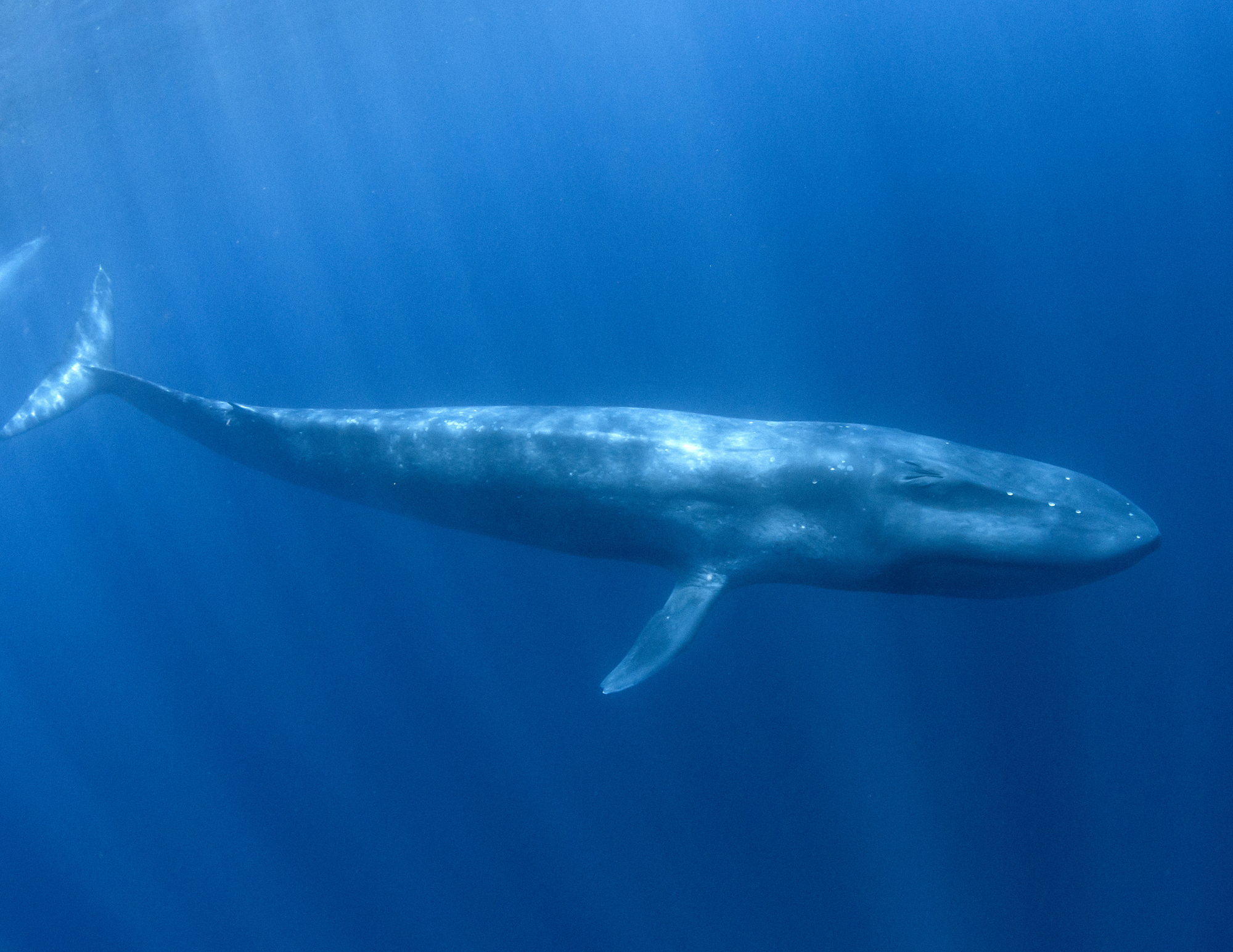
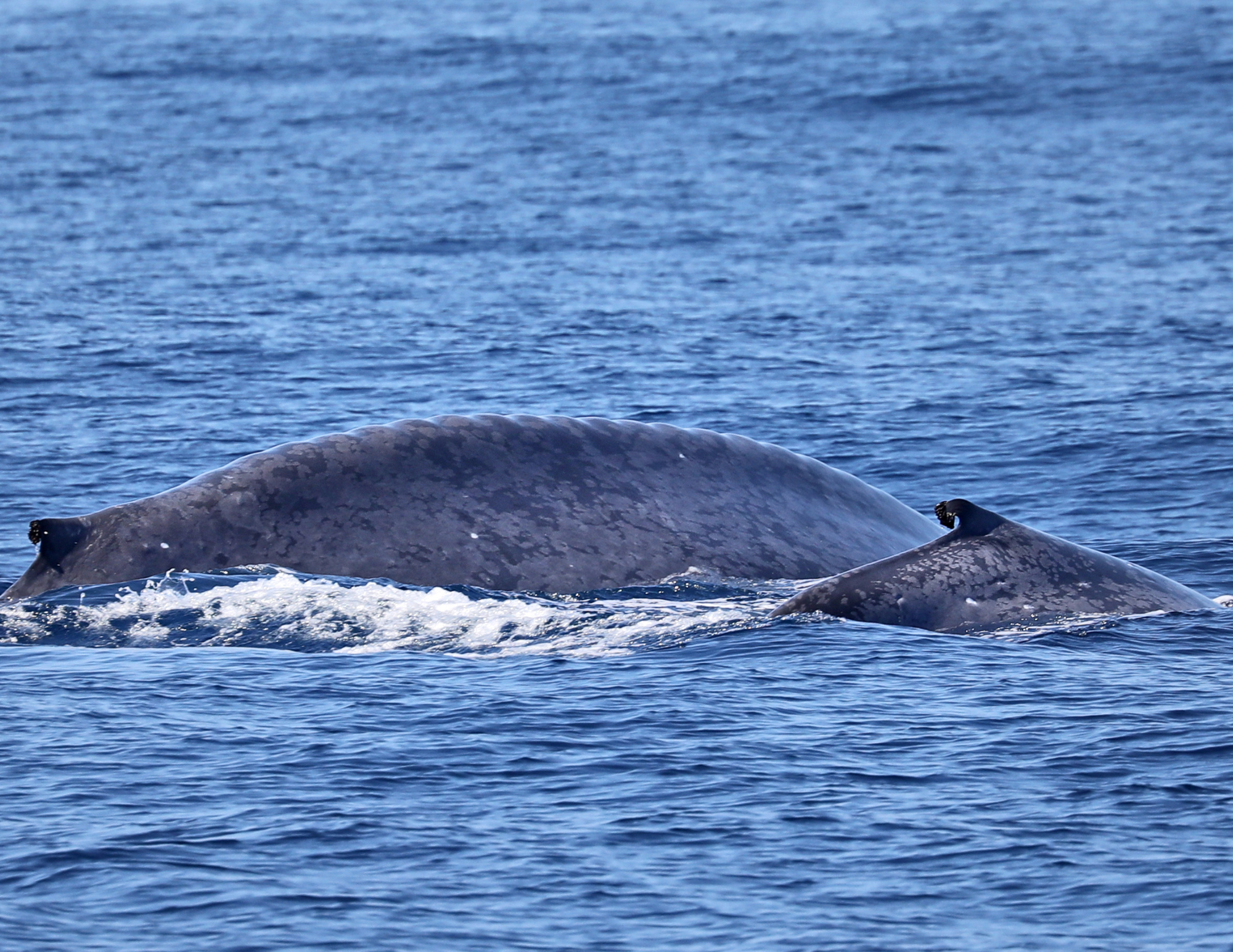
The blue whale (balaenoptera musculus) is the largest animal to have ever lived on Earth. They can reach lengths of up to 100 feet and weigh as much as 165 tons (330,000 pounds). An elephant, the largest living terrestrial animal, weighs only 4.5 tons.
Blue whales also have the distinction of being the loudest animals on earth, with calls reaching 188 decibels. A jet engine only reaches about 148 decibels. Their average lifespan is 80 to 90 years old. Scientists can calculate a blue whale’s age by examining its ear wax. Each year, a light and dark layer of wax builds up, corresponding with the whale’s diet during migration and the breeding season.
This gigantic marine mammal survives on one of the smallest creatures in the ocean, krill. Blue whales eat about four tons of krill a day. They swallow huge amounts of seawater and use their bristly plates of baleen to filter out the krill, then use their giant tongue to lick the krill off the baleen.
Blue whales are typically solitary creatures. They spend the summer months in polar waters, then migrate to the equator in the winter to breed. Pregnancy lasts about 12 months. A blue whale calf is about 25 feet long and 8,800 pounds at birth, and gains nearly 200 pounds a day from drinking its mother’s nutrient-rich milk.
Blue whales are considered an endangered species, with only about 10,000 to 25,000 individuals left in the world. In the 1900s, they were hunted extensively for the oil in their blubber. Before 1911, there may have been as many as 300,000 blue whales.
Ocean Institute’s Whale and Marine Life Tours
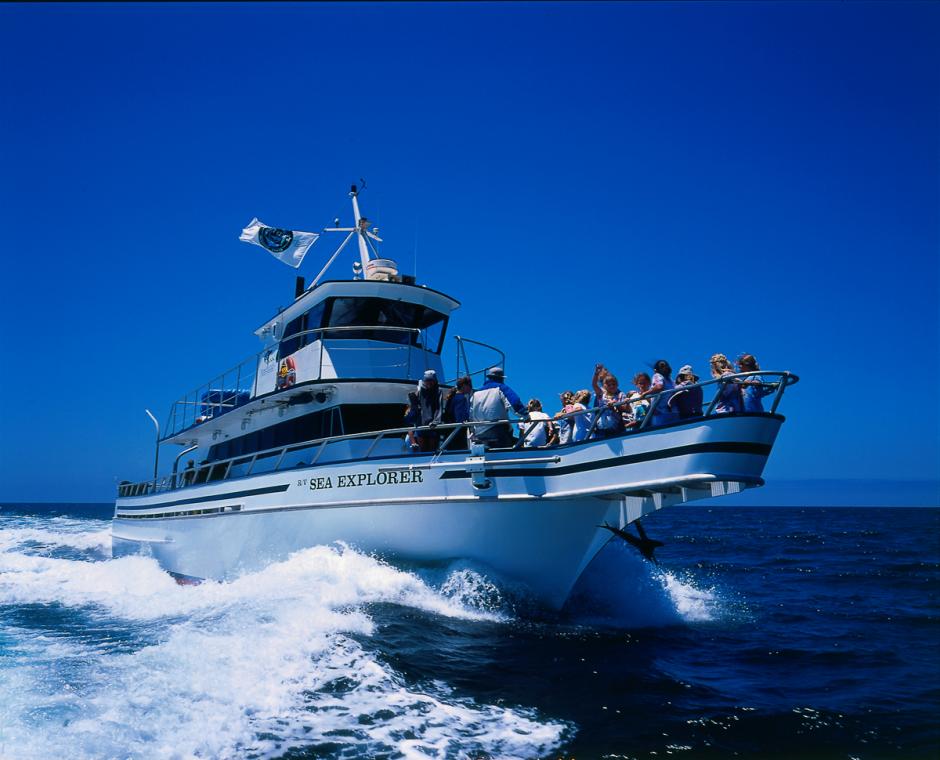
Blue whales can often be spotted off of Dana Point during the summer months. On our Whale and Marine Life Tours, you can join the crew of the Research Vessel Sea Explorer for a whale watching experience you will never forget. See whales, dolphins, sea lions, and more as you explore the Pacific Ocean. Our cruises are safe and fun for the entire family, and everyone will learn something new about our oceans and the life within.