
- This event has passed.
Teacher Workshop
January 10 @ 9:30 am - 1:00 pm
Calling all teachers!
Learn from an expert guest speaker and Ocean Institute staff as they share insights on the importance of experiential learning and how hands-on opportunities can transform student engagement and understanding across all subjects.
- Complimentary lunch
- Free General Admission after the workshop – explore our touch tanks, marine exhibits, and more at your own pace!

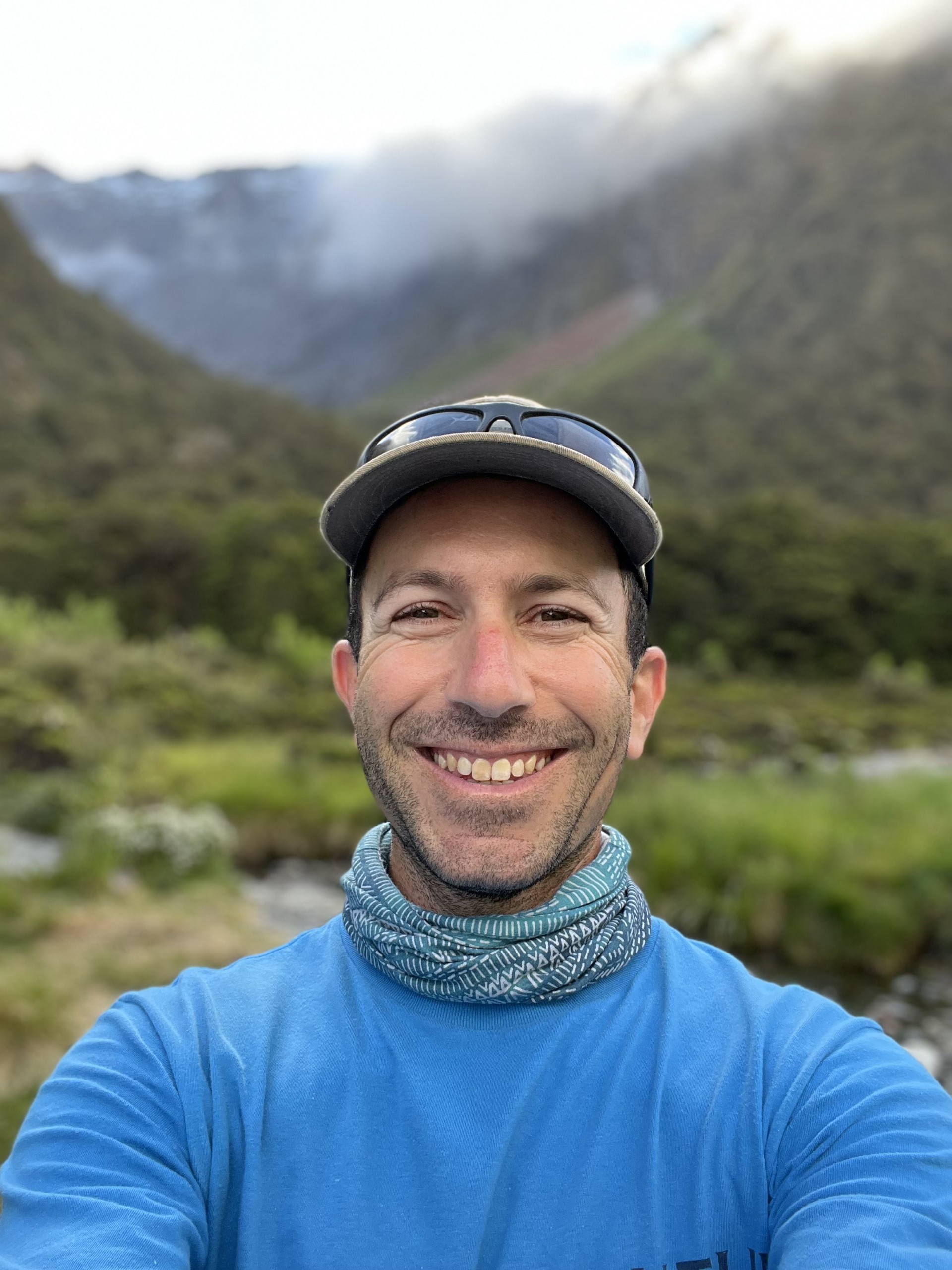
Guest Speaker: Dr. Ben Perlman
Professor at CSU Long Beach and Principal Investigator of STABB Lab
Dr. Benjamin Perlman is a full-time lecturer in the Department of Biological Sciences at California State University, Long Beach. He is also the principal investigator of the STABB Lab (Stingray And Butterfly Biomechanics). His lab studies the kinematics, kinetics, and morphology of animals, currently focusing on the round stingray. Using high-speed cameras, material testers, 3D scanners, and X-ray imaging, Ben and his team describe the form and function of stingrays. The STABB Lab is putting the science behind the colloquial SoCal saying, “do the stingray shuffle!”
Also, Ben teaches an introduction to evolution and diversity course, general ecology, human anatomy, ichthyology, and scientific communication. He also collaborates with the Catalina Island Conservancy, taking undergraduate students to Catalina to conduct various field studies across the island, focusing on the introduced Argentine ant and the endemic shrew.
Before he arrived at CSULB, Ben studied the swimming performance of surfperches at Moss Landing Marine Labs for his Master’s degree, then completed his Ph.D. at Wake Forest University studying the jumping and swimming kinematics and muscle physiology of an amphibious fish in Belize. He then became a postdoctoral researcher at Stanford University focusing on bird wing biomechanics, then conducted experiments on frog jumping and dragonfly larvae swimming and feeding behaviors at UC Irvine for his second postdoctoral position.
Also, Ben teaches an introduction to evolution and diversity course, general ecology, human anatomy, ichthyology, and scientific communication. He also collaborates with the Catalina Island Conservancy, taking undergraduate students to Catalina to conduct various field studies across the island, focusing on the introduced Argentine ant and the endemic shrew.
Before he arrived at CSULB, Ben studied the swimming performance of surfperches at Moss Landing Marine Labs for his Master’s degree, then completed his Ph.D. at Wake Forest University studying the jumping and swimming kinematics and muscle physiology of an amphibious fish in Belize. He then became a postdoctoral researcher at Stanford University focusing on bird wing biomechanics, then conducted experiments on frog jumping and dragonfly larvae swimming and feeding behaviors at UC Irvine for his second postdoctoral position.